Month: September 2015

Earth has lost half of its wildlife in the past 40 years, says WWF

On my birthday last year the World Wildlife Fund released its 2014 Living Planet Report. The headline was that vertebrate populations around the world have declined by an average of 52% between 1970 and 2010. Happy birthday, Will.

So in my lifetime the number of animals with backbones has declined by more than half.

I have been blessed in my lifetime to have grown up spending most of my time in beautiful places and noticing nature. When I was ten I was given my first set of binoculars. Growing up in Mornington and holidaying on the Bellarine I made lists of birds as I saw them. Many of the birds that I saw when I was ten, no longer live in these places. Most of the robins are gone. Whistlers, flycatchers, honeyeaters. A fragment of wading birds remain. Tadpoles and frogs, caterpillars and butterflies, were all staples of growing up in the 1970’s. Not any more. I feel the loss.

Our consumption is trashing a natural world infinitely more fascinating and intricate than the stuff we produce.

This is a moment at which anyone with the capacity for reflection should stop and wonder what we are doing.

If the news that in the past 40 years the world has lost over 50% of its vertebrate wildlife (mammals, birds, reptiles, amphibians and fish) fails to tell us that there is something wrong with the way we live, it’s hard to imagine what could. Who believes that a social and economic system which has this effect is a healthy one? Who, contemplating this loss, could call it progress?

Is this not the point at which we shout stop? At which we use the extraordinary learning and expertise we have developed to change the way we organise ourselves, to contest and reverse the trends that have governed our relationship with the living planet for the past 2m years, and that are now destroying its remaining features at astonishing speed?

Is this not the point at which we challenge the inevitability of endless growth on a finite planet? If not now, when?

George Monbiot
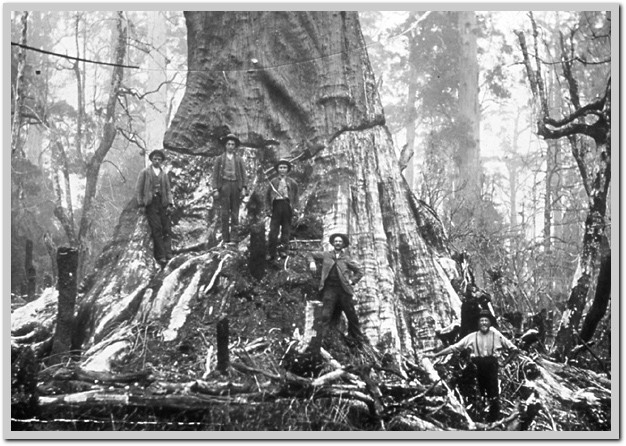
sth gippsland

When I was ten, there was a nature table in my classroom. When I was ten, young people spent more than 3 times the hours in the outdoors. Today we are a people disconnected from our roots and blithely unaware of our massive impact on life on earth. We need to act.

Schools have a vital role to play and we have lost our way in striving to connect young people with the natural world – that which ultimately sustains us all.
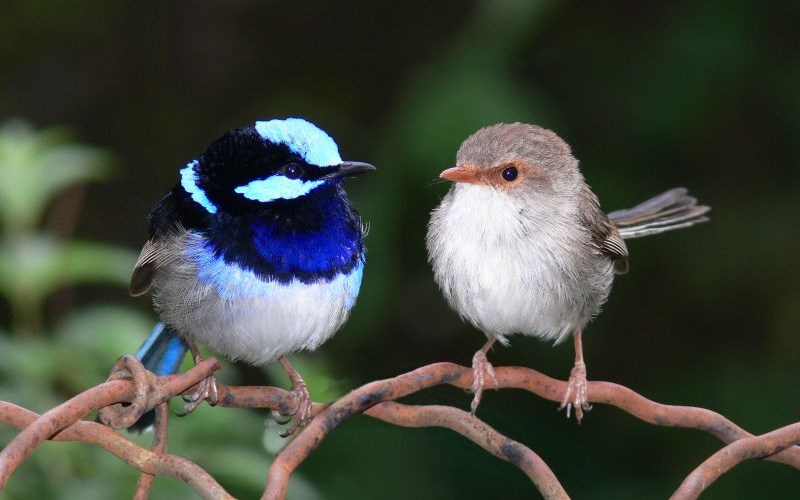
THE TRIUMPH OF THE FAIRY-WRENS First they returned – now they breed successfully in our school garden

The superb fairy-wren is back breeding at our school after having been absent for decades. By assisting with the establishment of a diverse indigenous garden, every Year 4 student since 2008 – nearly 350 young people – can each claim partial responsibility for the return of this beautiful little bird.

In May 2013, the ever-alert Annabelle, won herself the distinction of being the first person in decades to sight the bird here at school. This wren is common down in the Barwon valley where there is ample groundcover, but had disappeared from our landscape due to a lack of habitat.

Since Anabelle’s sighting the wrens were an ephemeral presence in our garden, but last summer one pair nested – three times – to successfully raise four young birds. The wrens now bring new life, new joy, new sounds and new colours to our garden.

The project began in winter 2008, when several large, old and dying cypress trees were removed. In the following spring, the Year 4 students (now in Year 11) planted 70 Kangaroo apples (solanum aviculare) to act as pioneer plants on the barren site. This was the first stage of the project entitled, “Can we entice the superb fairy-wren back to the Geelong College property?” During the long drought, many plants struggled to establish themselves, but the good rains of 2011 and 2012 contributed to strong plant growth. Local indigenous plant guru John King (owner of Geelong Indigenous Nurseries) has been a generous supporter of the project, arriving each year with another collection of indigenous plants sourced from seed collected from within 15km of our property.

The area now features a diversity of plants and a host of seasonal insects and bugs, including hoverflies, butterflies, moths and bees. The soil is richer and is also host to a diverse array of life. Larger birds including the crimson rosella, white cockatoo, common bronzewing, crested pigeon, little raven, new holland honeyeater, red wattlebird, and pied currawong have been recorded on the site. However until Annabelle’s sighting of the first blue wrens, none of the smaller ‘bush’ birds (wrens, finches, thornbills, fantails and scrub wrens) had been recorded. The arrival of any ‘new’ species will occur only when the habitat is right.

The superb fairy-wren is often one of the first birds to colonise newly re-vegetated land. They require:

  • protection from predators – thickets of shrubs, with prickly branches or leaves can provide the perfect place to retreat from danger
  • safe nesting sites – they like to build a nest around 1.2 metres above the ground. The nesting site will be found among tightly packed shrubs.
  • a diversity of insects
  • open areas of lawn or leaf litter, where insects live and breed, providing a ready food supply to fairy-wrens

The wrens can be seen and heard every day hopping around in the orchard, the chook pen, the food garden beds, the Enviro classroom deck and even in some newly constructed cubbies.

In early discussions about the likely success of the project, 10 year old Suzie (now in Year 11) said, “But it’s much better to try than not to try. Not trying makes no sense.” Her words have echoed through the years and have provided much of the inspiration needed to keep persevering.

This year we received a visit from Andrew Katsis a wren researcher from Melbourne University. He provided us all with further insights into the complex social world of our wren. As he predicted we have now seen the young females depart (they are thrown out of the family group after one year) and one young male choose to leave (he was just gaining his first flush of blue plumage before he left). This leaves us with the original breeding pair who are now sneaking around furtively most likely nest-building again.

Given the speed at which suitable habitat for native wildlife is disappearing from our modern suburban gardens, this has been an important project. More and more children are growing up with less nature in their backyards and significantly less contact with nature in their lives.

This project continues to help young people (and older ones too) connect in a meaningful way to their local natural world and also learn that there are simple ways that each of us can make a contribution to our local places. Making a difference simply requires a little knowledge, a few years and a dose of perseverance.

The WWF reported last year that in 1970 we shared our planet with twice as many vertebrates as we do today. This bleak fact demands action from educators. Every school should work hard to actively engage young people with their natural world. Many schools are getting into it.

Is there a school near you that boasts a re-vegetation project, or creates habitat for birds, lizards or insects? If there isn’t, there will be. Soon.